The Brown-Banded Cockroach (Supella longipalpa): A Comprehensive Overview
The brown-banded cockroach (Supella longipalpa) is a highly adaptable indoor pest often called the “furniture cockroach.” Unlike moisture-loving roaches that cluster near sinks and drains, brown-banded cockroaches thrive in warmer, drier, elevated areas throughout a home—making infestations easy to miss and harder to eliminate without a targeted plan.
Identification and morphology
The brown-banded cockroach, scientifically classified as Supella longipalpa (Fabricius, 1798), represents one of the most adaptable and pervasive domestic pest species within the order Blattodea and family Ectobiidae. This small cockroach, often referred to as the "furniture cockroach" due to its preference for infesting household furnishings, measures approximately 10 to 14 millimeters in length as an adult. Its distinctive morphology includes a tan to light brown body adorned with two prominent pale yellowish-brown transverse bands—one across the base of the wings (or thorax in nymphs) and another across the mid-abdomen. These bands, which may appear irregular or broken in some individuals, provide the species with its common name and serve as a key diagnostic feature.
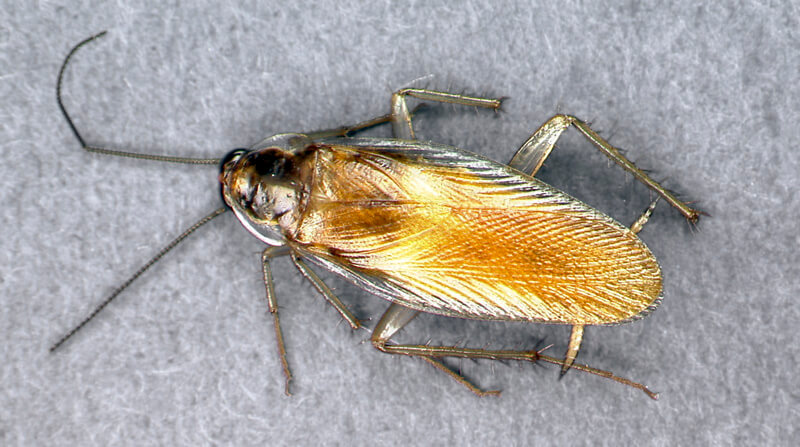
Image credit: University of Florida IFAS Entomology
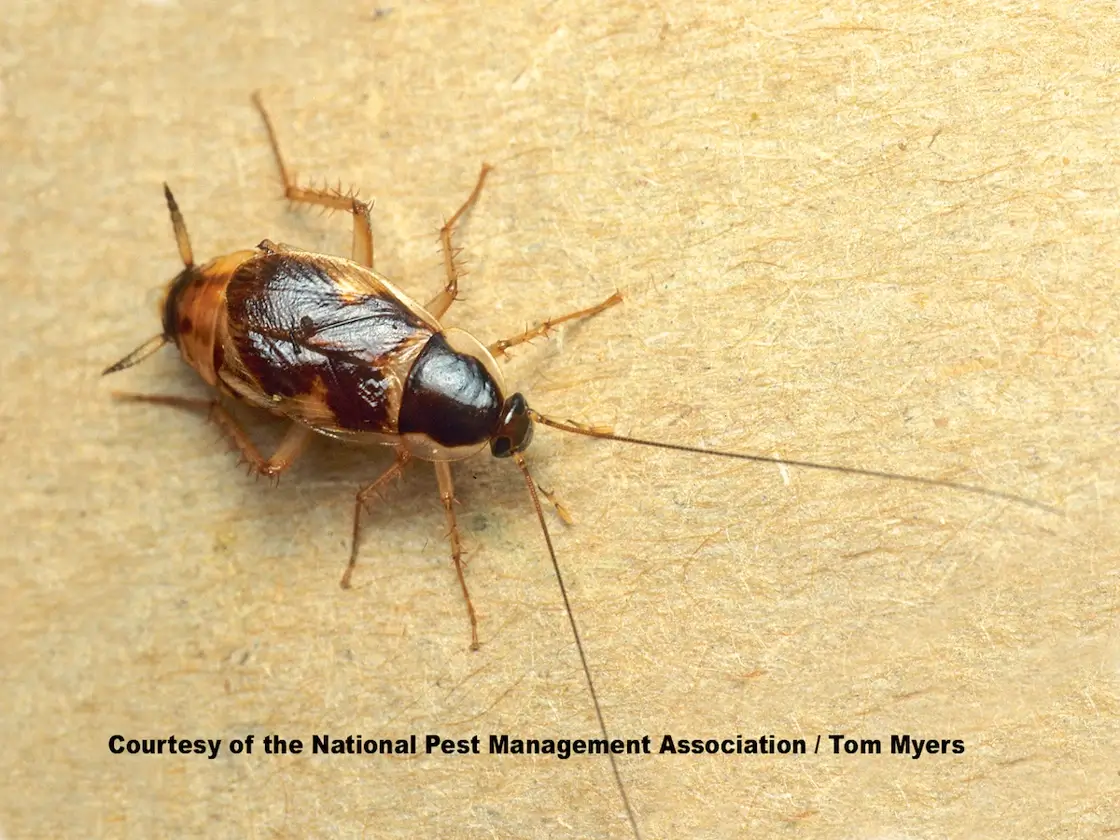
Image credit: PestWorld.org
Sex differences and immature stages
Sexual dimorphism is evident: males possess fully developed wings that extend beyond the abdomen, enabling limited gliding or short flights, while females have shorter, non-functional wings that leave the abdomen partially exposed. Both sexes exhibit long, slender antennae exceeding body length, equipped with numerous sensilla for detecting environmental cues. Nymphs, the immature stages, are darker overall, with the banding pattern more pronounced, rendering them highly recognizable.
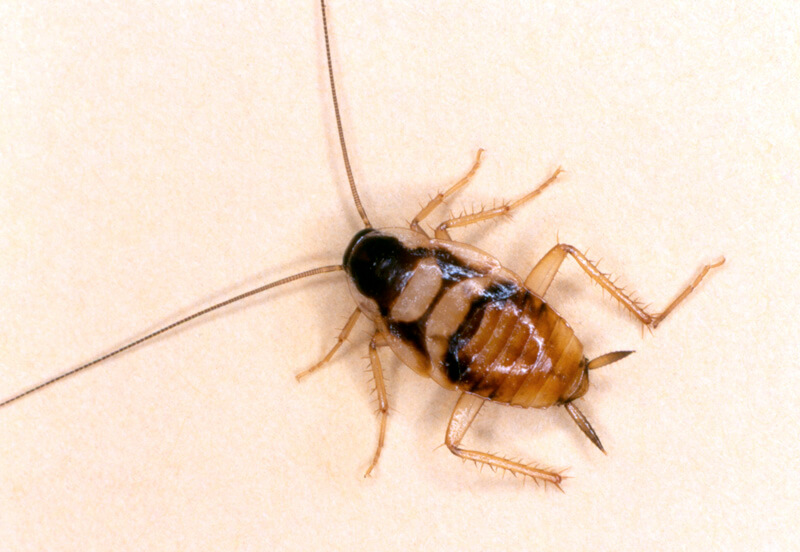
Image credit: University of Florida IFAS Entomology
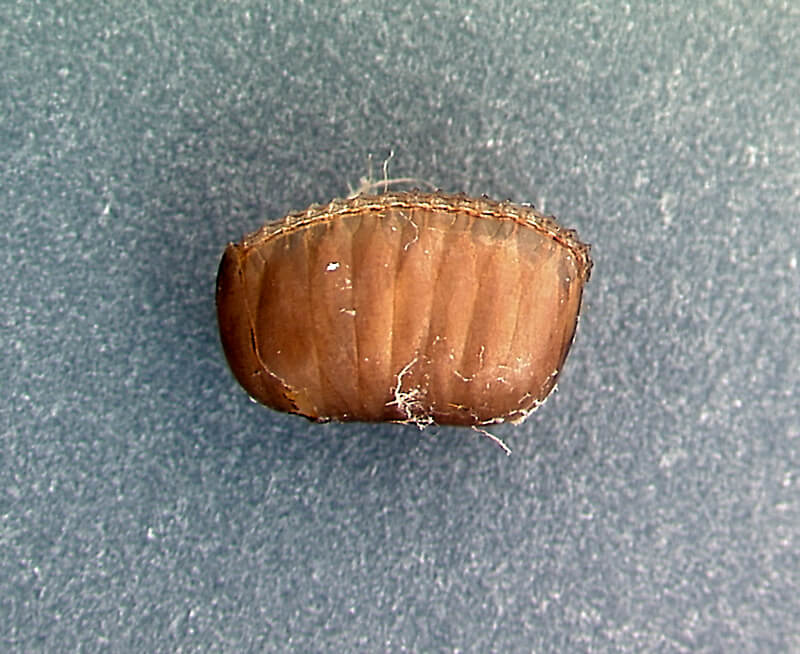
Image credit: University of Florida IFAS Entomology
Origin and distribution
Originally native to regions in northern Africa, S. longipalpa has become a cosmopolitan synanthropic species, thriving exclusively in human-associated environments. It was introduced to the United States around 1903, likely via Cuba into Florida, and has since established populations across the continental United States, particularly in warmer southern and midwestern states. Distribution maps indicate widespread presence, with higher densities in heated indoor settings.
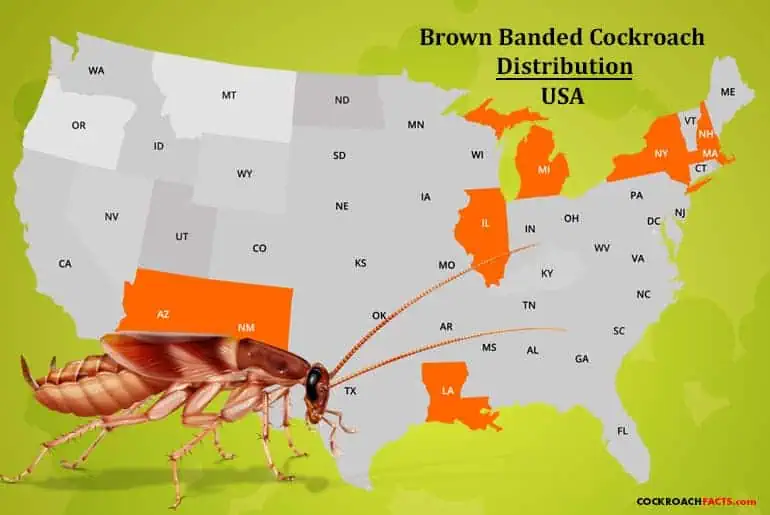
Image credit: CockroachFacts.com
Life cycle and reproduction
The life cycle of the brown-banded cockroach follows the typical hemimetabolous pattern of cockroaches: egg, nymph, and adult. Females produce oothecae—purse-shaped egg cases approximately 5 millimeters long, yellowish to reddish-brown in color—containing 10 to 18 embryos each. Unlike many cockroach species that carry the ootheca until hatching, females of S. longipalpa extrude it after 24 to 36 hours and affix it to concealed surfaces using secretions, often in elevated or hidden locations such as behind picture frames, inside furniture, or on ceilings.
A single female may produce up to 14 oothecae in her lifetime, yielding potentially 600 offspring. Incubation lasts 50 to 75 days depending on temperature, with optimal development occurring above 27°C (80°F). Nymphs undergo 6 to 8 instars over 2 to 6 months, molting progressively until adulthood. The entire life cycle averages 161 days, though males mature faster than females. Adults live several months, with females exhibiting greater longevity.
Behavior and indoor harborage
Behavioral ecology distinguishes S. longipalpa from moisture-dependent relatives like the German cockroach (Blattella germanica). This species tolerates drier conditions and prefers warmer, elevated harborage sites. Infestations commonly occur in living rooms, bedrooms, closets, upper cabinets, behind wall decorations, and within electronics or appliances generating heat—earning its "furniture cockroach" moniker. Nocturnal by nature, individuals forage widely but avoid floor-level areas near water sources. They are omnivorous scavengers, consuming starchy materials (e.g., wallpaper paste, book bindings, envelope glue), human foodstuffs, dyes, and even nylon stockings in extreme cases. Transport via infested furniture facilitates rapid dispersal within buildings, including apartments, hotels, and hospitals.
Health impacts and why they matter
From a human perspective, S. longipalpa presents predominantly negative impacts as a domestic pest. It serves as a mechanical vector for pathogens, carrying over 33 species of bacteria (including Escherichia coli and Salmonella), parasitic worms, and other microorganisms on its body and legs. Contamination of food preparation surfaces, utensils, and stored items can lead to foodborne illnesses such as gastroenteritis or diarrhea.
Additionally, shed skins, feces, saliva, and decomposing bodies release potent allergens that trigger respiratory issues. Studies link cockroach allergens, including those from brown-banded specimens, to sensitization rates of 40-60% in urban asthmatic populations, exacerbating symptoms like wheezing, rhinitis, and dermatitis—particularly in children. Prolonged exposure increases asthma severity and emergency visits. Psychological effects include stress and reduced quality of life due to perceived uncleanliness.
Property and economic impacts
Property damage arises from staining by excretions, consumption of organic materials (e.g., fabrics, paper), and potential short-circuiting of electronics through harborage in warm devices. Infestations are notoriously difficult to eradicate due to dispersed hiding spots and rapid reproduction, often requiring integrated pest management combining sanitation, exclusion, and targeted insecticides.
Prevention and control (what actually works)
Control strategies emphasize prevention: sealing entry points, reducing clutter, vacuuming harborage areas, and monitoring with sticky traps. Insect growth regulators, baits, and dusts target dispersed populations effectively. Biological approaches, such as entomopathogenic fungi (Metarhizium anisopliae), show promise in laboratory settings for sustainable management.
- Focus on high, warm areas: upper cabinets, closets, behind frames, inside electronics.
- Use monitoring traps: place sticky traps in closets and higher shelving, not only under sinks.
- Reduce hiding spots: declutter closets, storage rooms, and furniture seams.
- Target with baits/IGRs: these are often more effective than broad spraying for this species.
- Prevent re-introduction: inspect used furniture and boxes before bringing them inside.
In conclusion, the brown-banded cockroach exemplifies remarkable evolutionary adaptation to human habitats, thriving where moisture-loving congeners falter. Its distinctive banding, dry-environment preference, and prolific reproduction enable persistence in modern dwellings. While posing substantial health, hygienic, and economic drawbacks through allergen production, pathogen transmission, and elusive infestations, it lacks meaningful benefits in domestic contexts. Understanding its biology informs vigilant sanitation and professional intervention, mitigating impacts in shared human spaces. Ongoing research into its pheromones (e.g., supellapyrone) and microbiome may yield innovative control methods, reducing reliance on broad-spectrum chemicals.
Need help with cockroaches in Southwest Florida?
If you’re seeing roaches in closets, bedrooms, upper cabinets, or electronics, you may be dealing with brown-banded cockroaches. PestGone can help you identify the species and build a targeted plan that’s safe for families and pets.
Get a Free Quote