Effective Strategies for Food Workers to Deter Pests from Outdoor Dumpsters
Outdoor dumpsters can quickly attract rodents, insects, and birds if waste handling becomes inconsistent. This guide breaks down simple, everyday routines food workers can follow to reduce pest activity, support health-code compliance, and protect workplace hygiene—especially in warm, humid climates like Florida.
Why Outdoor Dumpsters Attract Pests
In the world of food service, maintaining a clean and safe environment is essential not only for the health of customers but also for the success of the business. One often overlooked area is the outdoor dumpster, which can become a magnet for pests if not managed properly. Pests such as rodents, insects, and birds are drawn to these areas because they provide easy access to food scraps, water, and shelter. This article explores practical ways food workers can deter these unwanted visitors from outdoor dumpsters. By using simple, everyday steps, workers can prevent infestations, comply with health regulations, and protect the overall hygiene of their workplace. We will break down each method in detail, explaining why it works and how to implement it effectively.
First, it is important to understand why pests are attracted to outdoor dumpsters in the first place. Dumpsters hold waste from kitchens, including leftover food, packaging, and liquids. When this waste decomposes, it releases strong odors that signal a free meal to animals like rats, mice, flies, cockroaches, and even raccoons. In warm climates, such as those found in Florida, pests multiply quickly due to the heat and humidity, making prevention even more critical. Health departments in states like Florida require food establishments to follow strict guidelines, often based on national standards like the FDA Food Code, to avoid fines or closures. Deterring pests is not just about avoiding problems; it is about creating a routine that keeps the area unappealing to them.
Clean the Dumpster Area Daily
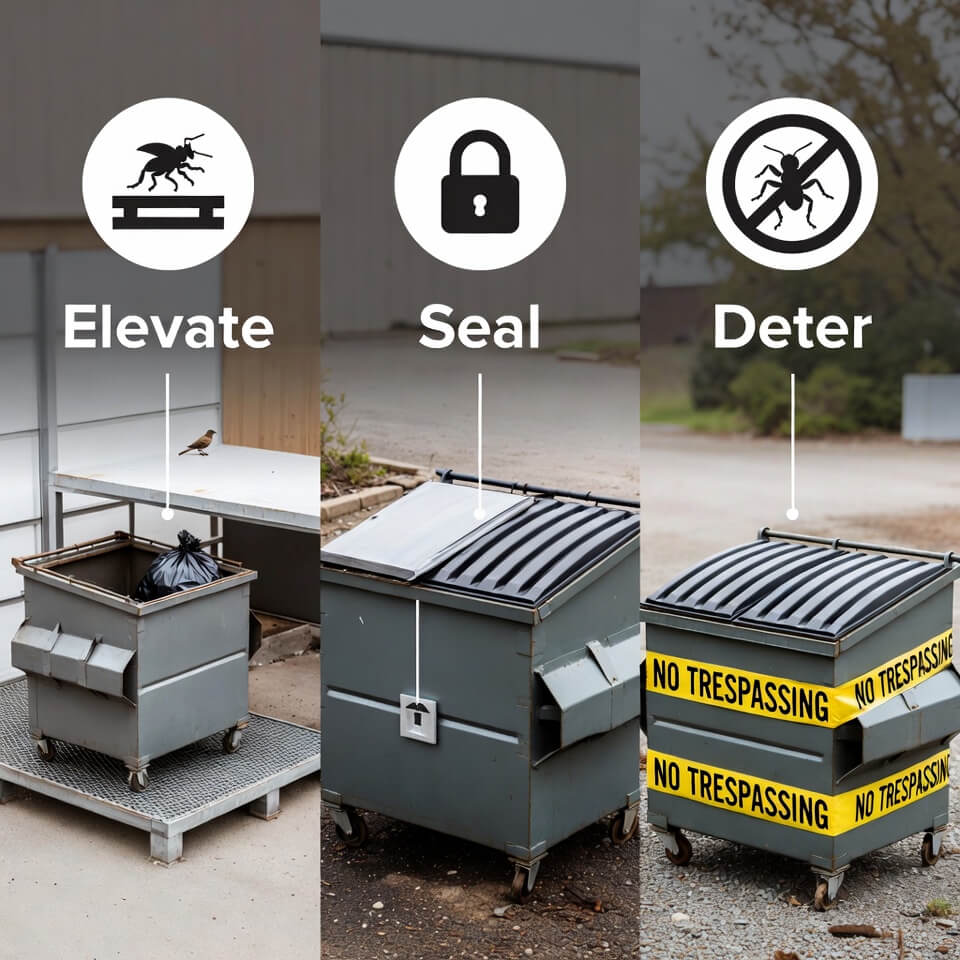
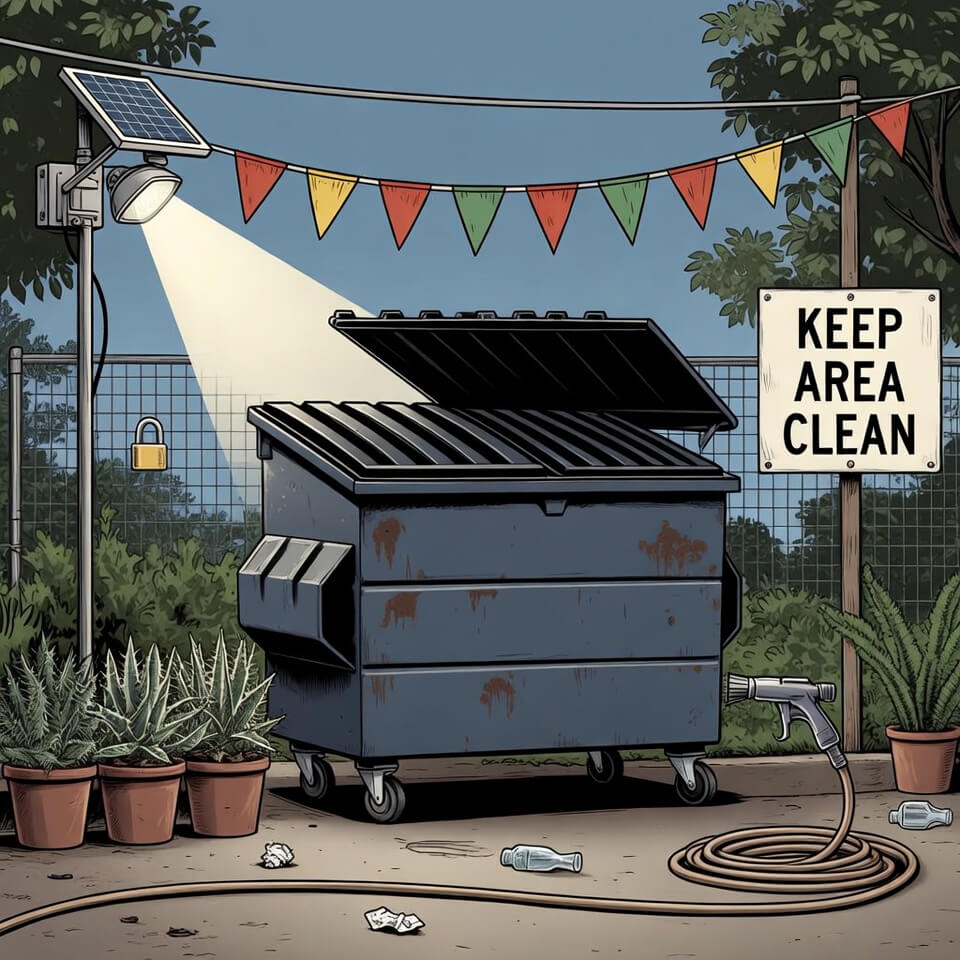
One of the most basic yet powerful ways to deter pests is by keeping the area around the dumpster clean. Imagine the dumpster as the center of a small zone that needs constant attention. Food workers should sweep or hose down the ground daily to remove any spilled food, grease, or debris. Spills happen easily when bags are thrown in, so checking for leaks and cleaning them up right away is key. Why does this work? Pests rely on these bits of waste as food sources. Without them, there is nothing to eat, and the pests move on to find better options elsewhere.
In practice, workers can use a broom for dry sweeping and a hose with a mild detergent for wet cleaning. Ensure the water drains away properly to avoid puddles, as standing water attracts mosquitoes and other insects. This simple habit can reduce pest activity significantly, and it aligns with training programs like ServSafe, which emphasize sanitation as the first line of defense.
Keep Dumpster Lids Closed and Sealed
Next, securing the dumpster itself plays a major role in pest deterrence. Dumpsters should have tight-fitting lids that close automatically after use. Food workers must make it a rule to always shut the lid firmly—never leave it open, even for a short time. Descriptive of this process: picture a worker carrying a full trash bag to the dumpster. They lift the lid with one hand, place the bag inside carefully to avoid spills, and then let the lid fall back into place with a satisfying click.
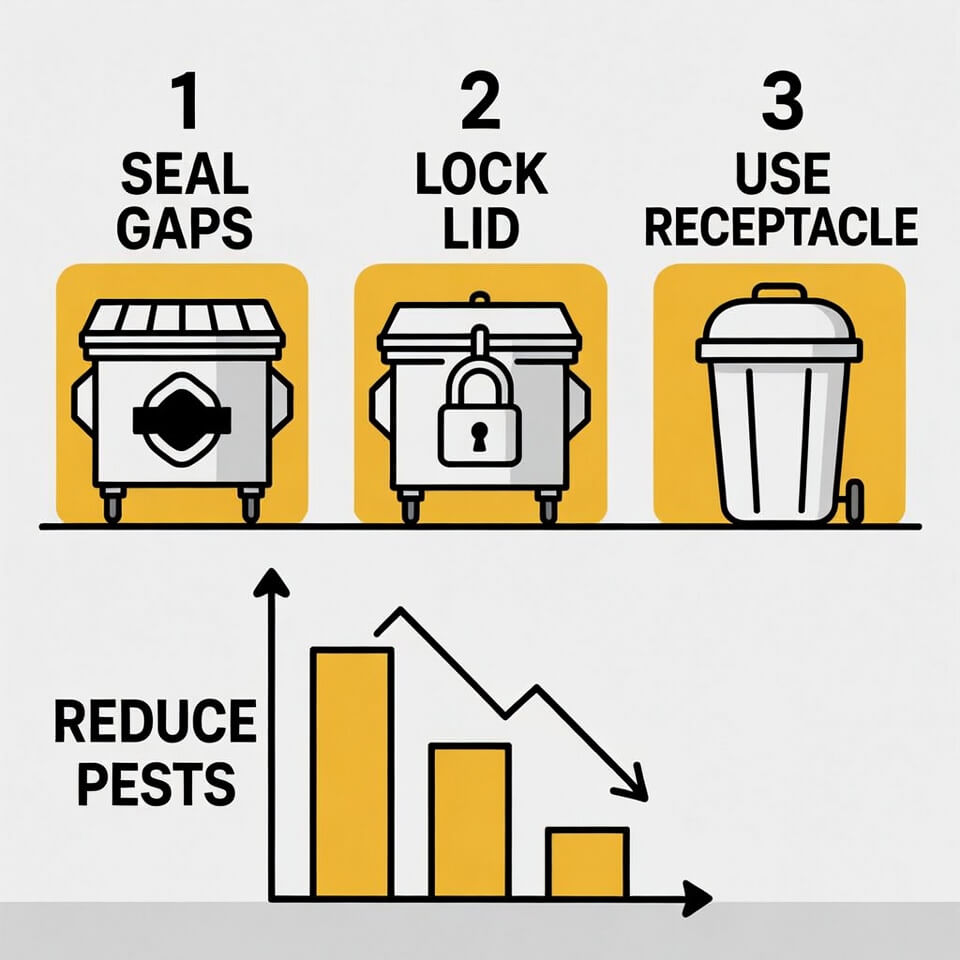
If the lid is damaged or does not seal well, report it to management immediately for repair or replacement. Sealing waste inside heavy-duty plastic bags before tossing them in adds another layer of protection. These bags contain odors and prevent leaks, making the dumpster less noticeable to pests with keen senses of smell. In areas with high pest pressure, like Florida's urban zones, some businesses install locks on dumpsters to prevent tampering by animals or people, further reducing access.
Empty and Wash Dumpsters on a Schedule
Scheduling regular emptying and cleaning of the dumpster is another essential strategy. Overfilled dumpsters overflow, creating a mess that invites pests. Food workers should monitor the dumpster's fill level and coordinate with waste collection services to ensure pickups happen frequently enough—perhaps twice a week or more, depending on the business volume.
Between collections, cleaning the dumpster inside and out removes built-up residue. Use approved sanitizers, which are safe for food-related environments, applied with a brush or pressure washer. Explain this simply: the sanitizer breaks down grease and kills bacteria, while the rinsing removes any remaining attractants. This not only deters pests but also prevents bad smells that could affect nearby areas. In Florida, where regulations from the Department of Business and Professional Regulation mandate such practices, regular maintenance helps pass health inspections smoothly.
Place Dumpsters to Reduce Harborage
Positioning the dumpster correctly can make a big difference in pest control. Place it at least 18 inches away from walls, fences, or buildings. This gap eliminates hiding spots where pests might nest or travel unseen. Descriptively, think of the dumpster as an island in an open space; pests prefer dark, cramped areas, so keeping it isolated discourages them.
Avoid locating dumpsters near doors, windows, or food storage areas to prevent pests from migrating indoors. If possible, enclose the dumpster in a fenced area with a gate that closes securely. In sunny, humid places like Florida, elevating the dumpster on a concrete pad helps with drainage and makes it harder for ground-dwelling pests to approach. Workers should inspect the site regularly for cracks or gaps in the enclosure that could serve as entry points, sealing them with appropriate materials like caulk or metal mesh.
Add Physical Barriers and Use Professionals
While the above methods focus on prevention through cleanliness and structure, sometimes additional barriers are needed. For instance, installing screens or netting over vents or openings can block flying insects. Ground barriers, such as gravel strips around the dumpster, make it uncomfortable for rodents to dig or burrow.
However, food workers should avoid using traps or pesticides themselves unless trained and licensed, as these can contaminate the area or harm non-target animals. Instead, partner with professional pest control services for integrated pest management. This approach combines monitoring, prevention, and targeted treatments. In simple terms, professionals use tools like bait stations placed strategically away from food areas, ensuring safety. In Florida, licensed exterminators are familiar with local pests like palmetto bugs or fire ants, tailoring solutions to the environment.
Train the Team and Build Consistent Habits
Education and teamwork among food workers are crucial for long-term success. Everyone in the team should receive training on pest deterrence, often through certifications like ServSafe, which include modules on this topic. These programs teach that pests indicate underlying issues, like poor waste management, and stress the importance of reporting sightings immediately.
Descriptively, during a staff meeting, a manager might demonstrate proper dumpster handling, then quiz the team on scenarios: "What do you do if you see a rat near the dumpster?" The answer: document it, clean the area, and notify pest control. Building a culture of vigilance means assigning daily checks to different workers, ensuring consistency. This not only deters pests but also boosts morale by showing that everyone's role matters in maintaining a safe workplace.
Why It Matters: Public Health and Business Impact
Considering the broader impact, effective pest deterrence around dumpsters protects public health. Pests can carry diseases like salmonella or E. coli, which could spread to food preparation areas if not controlled. In Florida, with its bustling tourism industry, restaurants and hotels face high scrutiny; a pest issue could lead to negative reviews or legal troubles. By following these methods, businesses save money on repairs and lost revenue from closures. Environmentally, proper waste management reduces pollution from scattered trash, benefiting local wildlife and communities.
Example Checklist and Results
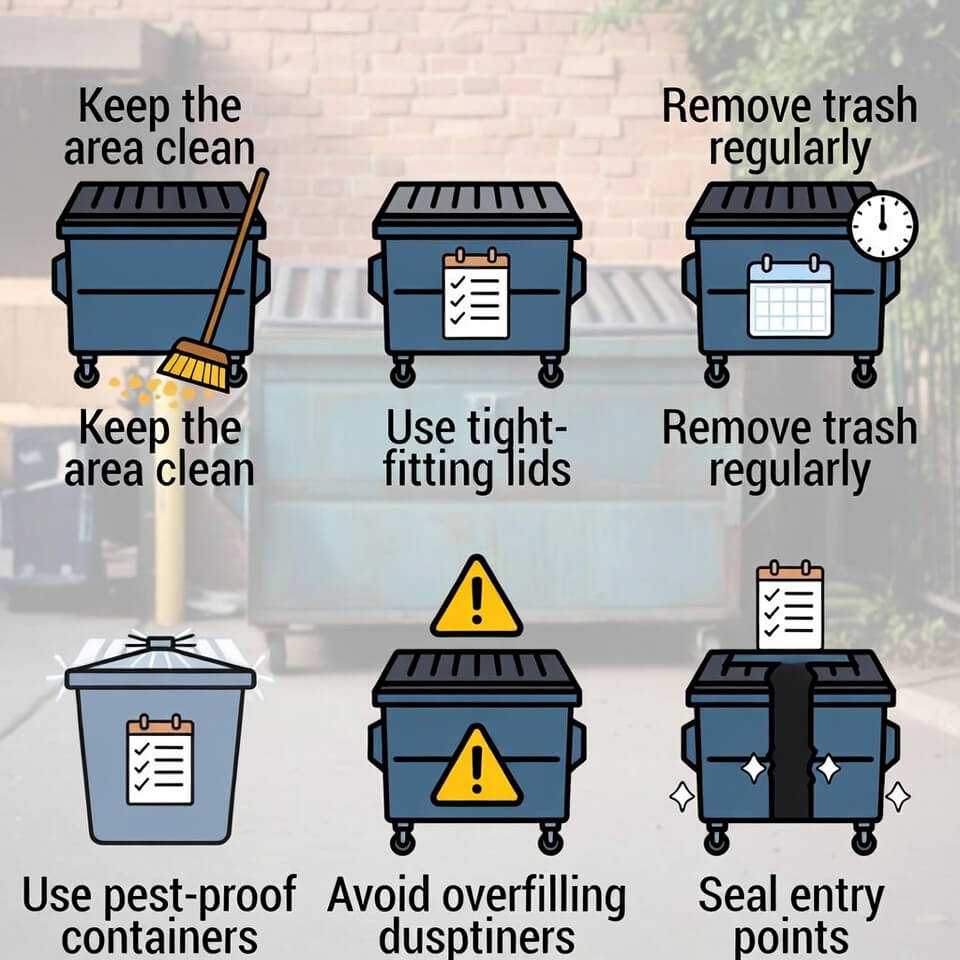
To illustrate the effectiveness, consider a real-world example from a Florida restaurant chain. After repeated pest sightings, they implemented a checklist: daily cleaning, secure lids, and weekly professional inspections. Within months, incidents dropped by over 80 percent, as reported in industry case studies. This shows that simple, consistent actions yield big results.
Optional Enhancements: Natural Deterrents and Lighting
In addition to the core strategies, food workers can incorporate natural deterrents where appropriate. For example, planting pest-repelling herbs like mint or lavender around the enclosure adds a pleasant scent while discouraging insects. However, this should complement, not replace, primary methods. Lighting the area at night with motion-sensor lights startles nocturnal pests like rats, making them less likely to linger. Ensure lights are energy-efficient to keep costs down.
Monitor for Early Warning Signs
Monitoring for early signs of pests is a proactive step. Look for droppings, gnaw marks, or nests during routine checks. If found, act swiftly: isolate the area, clean thoroughly, and consult experts. Keeping records of these inspections helps track patterns and demonstrate compliance during audits.
Technology Options for Larger Operations
Finally, integrating technology can enhance efforts. Some modern dumpsters feature sensors that alert when full, preventing overflows. Apps for scheduling cleanings streamline operations. While not essential for small businesses, these tools make deterrence easier in larger settings.
Conclusion
Deterring pests from outdoor dumpsters requires a combination of cleanliness, secure practices, strategic placement, and professional support. By explaining each step simply—clean daily, seal tightly, empty regularly, position wisely, and educate the team—food workers can create an unwelcoming environment for pests. This supports regulatory compliance in pest-prone areas like Florida and helps maintain a healthier, more efficient operation.
Need Help Reducing Commercial Pest Pressure?
PestGone provides professional all-natural pest control for Southwest Florida homes and businesses.
Get a Free Quote